


Bridging the Digital Gap: Why Home Care Workers Are Key to Italy’s Digital Health Transformation
In Italy, digital healthcare is advancing rapidly at a system level, yet its integration into everyday care practices remains uneven.
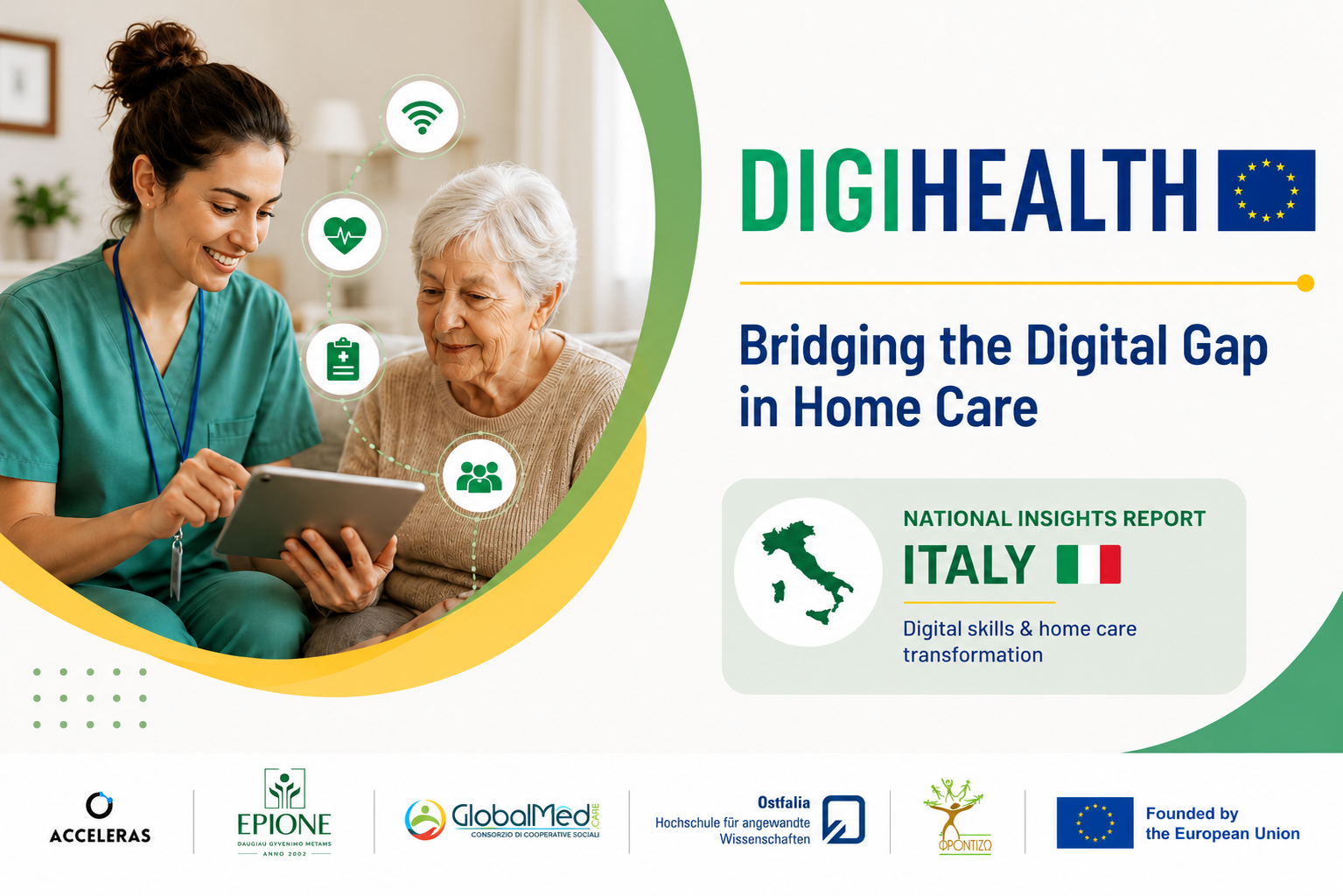
Imagine a typical home care scenario: a care assistant visits patients throughout the day, taking notes manually, relying on experience and direct observation. Meanwhile, digital tools such as electronic health records, telemonitoring devices, and remote consultation platforms exist—but are often used only by other professionals or remain confined to institutional settings.
This contrast clearly highlights one of the key challenges of digital healthcare in Italy today.
Italy’s Digital Health Momentum
In recent years, Italy has made significant progress in the digitalisation of healthcare. The COVID-19 pandemic acted as a turning point, accelerating the adoption of solutions such as electronic prescriptions, online services, and telemedicine.
Public investments—particularly through the National Recovery and Resilience Plan (PNRR)—are now driving further innovation, with a strong focus on electronic health records and remote care systems.
At the same time, demographic trends are increasing pressure on the healthcare system. An ageing population and rising life expectancy are creating a growing demand for long-term and home-based care.
Digital health is therefore no longer just an innovation—it is becoming a structural necessity for the sustainability of the system.
An Overlooked Workforce in Daily Care
Despite this progress, a critical gap remains: the limited involvement of home care workers in the digital transformation process.
In many cases, care assistants still rely heavily on manual processes. Digital tools are either not available or not fully integrated into their daily routines, and training opportunities remain limited.
This creates a structural imbalance. While hospital-based professionals are increasingly supported by digital systems, those working directly in patients’ homes—often the closest point of contact—are left behind.
Yet, their role is essential, especially in a country where home care is becoming increasingly central to healthcare delivery.
What Is Slowing Down the Transition
The barriers to digital transformation in Italy go far beyond the availability of technology.
One of the main challenges is the lack of digital skills among healthcare professionals, particularly in the home care sector. Training is not always systematically included in professional pathways, leaving many workers without the competencies needed to use digital tools effectively.
Infrastructural limitations—such as uneven internet connectivity, especially in rural areas—further complicate the situation.
Additionally, bureaucratic processes and organisational complexity often slow down the introduction of new technologies. A cultural dimension also plays a role: resistance to change, low awareness of the benefits of digital tools, and limited confidence in using them all contribute to a persistent digital divide.
Opportunities Still to Be Fully Realised
Despite these challenges, the potential of digital healthcare in Italy is significant.
Digital tools can improve efficiency, reduce errors, and enhance communication between healthcare professionals. They also enable better monitoring of patients—particularly those with chronic conditions—and support more personalised and continuous care pathways.
For home care workers, digitalisation could simplify daily activities, improve coordination with medical teams, and ultimately enhance the quality of care provided.
At a broader level, technologies such as telemedicine and electronic health records are key to building a more integrated and accessible healthcare system.
Why Skills Matter More Than Technology
A central insight emerging from the Italian context is that digital transformation is not only about tools—but about people.
Investing in digital skills is essential. Healthcare professionals need not only technical abilities, but also competencies in data interpretation, digital communication, and awareness of ethical and privacy-related issues.
At the same time, patients—especially older adults—must be supported in accessing and using digital services. Without this, even the most advanced technologies risk remaining underutilised.
Building a More Inclusive System
The Italian experience shows that digital healthcare cannot be effective unless it is inclusive.
Technologies must be designed and implemented in a way that reflects real working conditions and everyday care practices. This means actively involving all actors in the system—especially those who have been traditionally overlooked.
Home care workers, in particular, must be recognised as key players in this transformation. Providing them with adequate training, tools, and support is essential to unlock the full potential of digital health.
Putting People at the Centre of Digital Health
Ultimately, the digital transformation of healthcare in Italy is not primarily a technological challenge—it is a human one.
Systems and platforms alone cannot drive change. It is the people who use them, adapt them, and integrate them into daily practice who determine their real impact.
By strengthening digital competencies across all levels and ensuring that no professional group is left behind, Italy can move towards a more efficient, inclusive, and patient-centred healthcare system.